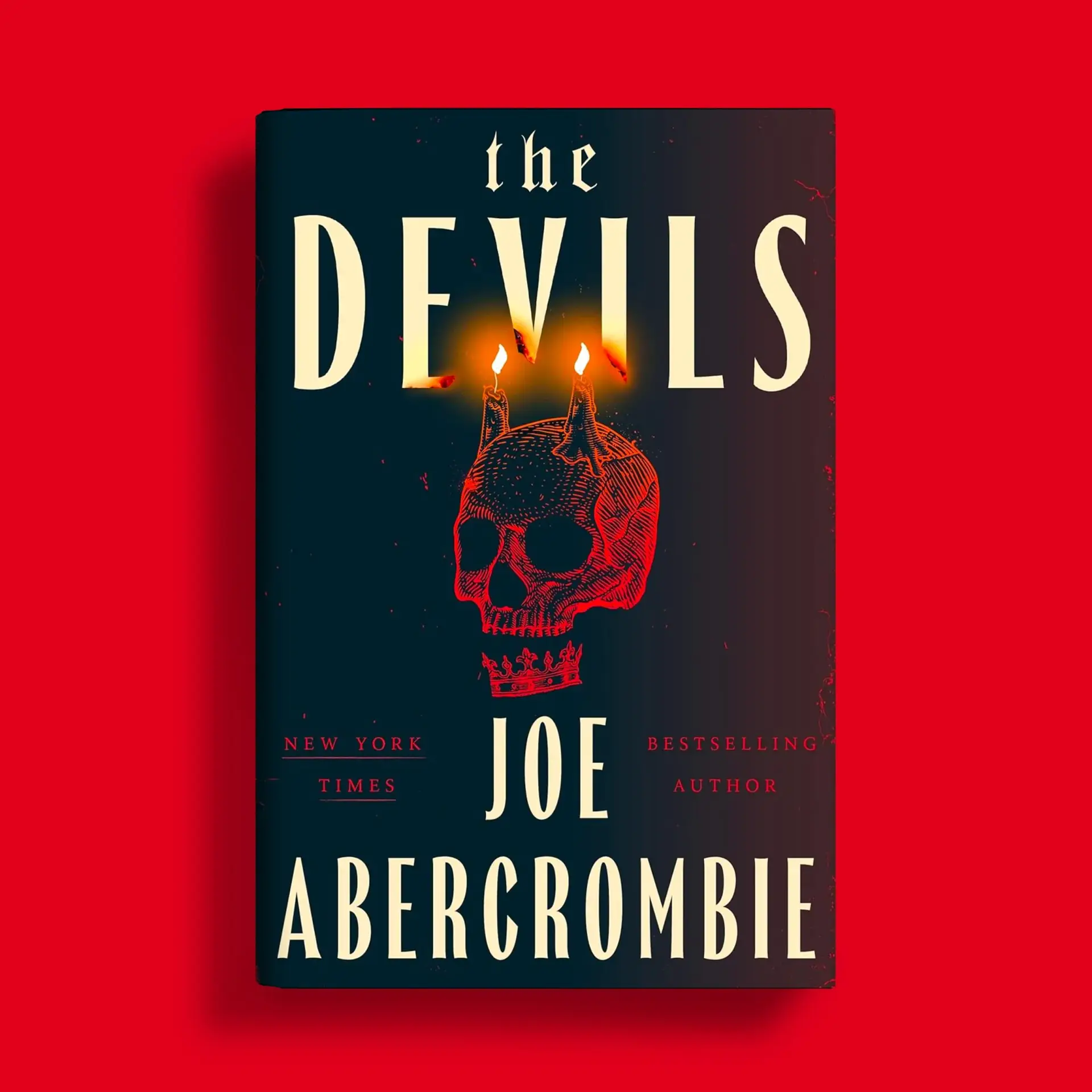
This was my first Joe Abercrombie novel and felt like a good way to test out his writing without diving into the full First Law trilogy. For years, I’ve heard how great an author of Dark Fantasy Abercrombie is from numerous creators on BookTok, with his character writing being the major highlight. Overall, I thought the book was alright, memorable to a degree, but nothing I would go out of my way to recommend or reread, and that’s why I haven’t stopped thinking about it. It rides a line of being very mid, but showcases and demonstrates beautiful moments of greatness.
Before we get ahead of ourselves, this is sort of a review, but mostly, it’s spawned from my desire to simply dump all of my thoughts about this book into one place. I will be referencing moments throughout the entire book, so spoilers ahead, and I am writing about it as if you have also read the book, so there’s your warning.
I want to immediately acknowledge that I think Abercrombie is a talented and eloquent author. He’s incredibly descriptive, allowing for vivid and imaginative scenes that one can perfectly picture. The “movie” of this book, unfolding in my imagination as I read, felt so realistic and well-crafted. By far one of the best and most memorable chapters within The Devils is Alex and Sunny’s desperate evasion through the town being pillaged to avoid capture by Cousin Three’s hunting party. A dogged pursuit through a burning village after days of starvation and cold, after barely surviving the boat attack, creates such a sense of palpable tension that leaves your chest tight. You can feel the flames of the raid, hear the screams and jeers of the soldiers destroying the town, and taste the ash and sweat in your mouth. Every thumping heartbeat and pulse-pounding moment felt like I was right behind Alex, holding my breath for Sunny’s next signal to move forward, and avoiding any fleeting hope that we’ll survive the night.
I’d also like to highlight the quiet moments of The Devils. I believe where Abercrombie’s evocative prose and character writing entwine to create actual magic in this novel is in the tender moments between characters, when all internal narratives melt away, and conversation flow back and forth between characters beautifully. I loved Baron Rikard ecstatically teaching Alex to have poise and posture, in a whirlwind of elocution and dance, to aid her evolution into a princess. Sunny, painfully having to ignore Alex’s shocking confession about taking the identity of the princess because she knew that, despite it all, this was now who Alex is, has to own that lie for the rest of her life, and any reaction would give Alex an out to run away from the destiny her lie has created, cut me to my core. I especially loved several of Jakob’s delicate moments, where he externally reflects on the life he’s lived, the wars he’s fought, the stories and history that have been forgotten in favor of weaving a heroic narrative, and stating that the truth about heroism isn’t the violence sown by the winner, but what is accomplished by non-violent confrontation. His greatest desire is to get anyone to understand that war and death shouldn’t be idolized, and he is undying proof of this, but is cursed to be heralded as a great warrior of God.
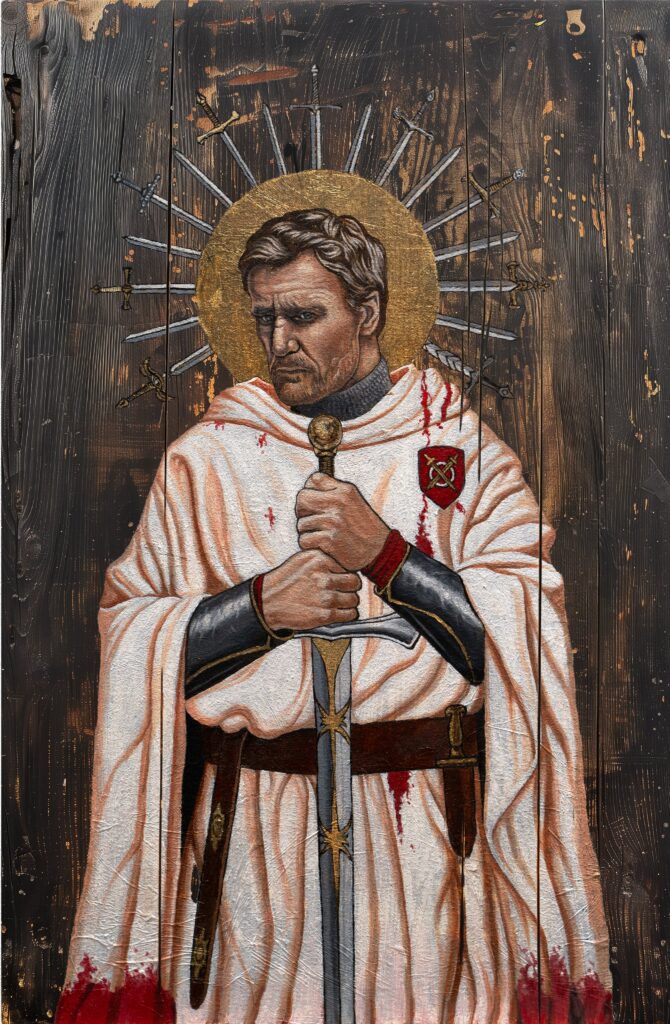
With all of that being said, I am left feeling deeply disappointed by The Devils and Abercrombie’s character writing in it. This felt like a novel that was more of an experiment of writing styles and action, and the layered character writing he is known for was left on the back burner. I felt the novel’s prose was repetitive and redundant, treating the reader like a child by hammering certain points ad nauseam to make sure you understood every single person’s motivations. This was most egregious and apparent with the mantra or prayer-like lines that each character whose perspective was focused on would repeat to express their worldview and motivations. Alex’s repeating of the lessons of Gal the Purse and reassurance about being a piece of shit who will do anything to survive, Vigga’s nuts analogy and plea for clean internal organs, Brother Diaz’s same basic prayer the moment any whiff of danger occurred, and the worst offender by far, Jakob’s mantras of war and combat. By the end of the book, I simply could not stand hearing the Jakob repeating “no one wants to see fear” and other catchphrases. They did not feel like wisdom from an eternal warrior who’s lost the will to fight, but a middle manager at a very busy Arby’s trying to hold things down during rush hour.
Another complaint I had with the character writing was that every character outside of those given a narrative perspective is incredibly shallow. Each villain is comically evil and shallow, quipping like a Marvel movie, and with no motivation outside of gaining more power through an ascent to royalty. They are so boring and bland that the action scenes, while intense and fast-paced, ultimately felt like they had no real stakes or significance. Each was simply a means to an end to have a highly detailed action set piece. Even members of the Devils fall victim to this blandness, with Baron Rikard ostensibly being a Deus Ex that the book would go to lengths to make you forget about his presence so he could come in and save the day. However, the most audacious crime of this one dimensionality is introducing Baptiste, a sauntering, swagger-filled pirate chock-a-block full of charisma, and not making her one of the main perspectives, or giving her any amount of depth more than what she received. Her life was beautifully hinted at and was the most intriguing element of the book’s seemingly deep lore and world building. Instead, Baptiste is relegated to a simple catch-phrase machine of “I’m getting too old for this shit” type lines, heckling Balthazar to force his narrative along, and dying off-screen to give the final fight some sort of narrative significance since it didn’t actually matter who ended up on the throne of this kingdom.
I think the most disappointing element of this book that I have been thinking about in the back of my head for weeks on end, is it’s themes and how little Abercrombie cares about them. The two main themes are “All of those in power are bastards no matter what” and “an old dog can’t learn new tricks and monsters aren’t allowed the grace of change.” This conclusion felt like such a wet fart of an ending, which forced all of The Devils, literally and metaphorically, into a box to prove that the real monsters were the church, the rich, and the aristocrats. The deranged, evil Eudoxia and her brood of children and students meant nothing in the face of the sniveling, conniving buerocrats of the Church, because they are the actual cabal of invisible hands guiding the world. It’s a sacrifice of every ounce of growth and tender moment that these prisoners of the church had in their journey to go “Haha, psych, organized religion and rich people suck.” It’s grim dark for the sake of being grim dark to make each character to simply go back to the way things were before this book unless given the grace of higher society and position in the world.
Alex is allowed to complete her metamorphasis from a street orphan piece of shit, because she lied enough to obtain the title of princess. Brother Diaz is allowed to change because he is the leader of The Devils, a cog in the machine of the church, and is granted amnesty and power by Alex to take over the Eastern church to challenge the Western church’s power grab. But no one else is allowed to maintain their growth and is flattened into a box of their devil type. Vigga willingly returns to her box and falls back into being a mindless werewolf beast after experiencing tender love and accepting the beast within her to aid her friends. Balthazar literally found God through his several escape attempts and learning that even the most power of necromancy spells couldn’t defy the Pope, refused working with the world’s greatest living mind in the realms of magic, and willingly stayed with The Devils to support the returned Savior, only to be rejected by the beurocrats, placed back into captivity, and devolving back to plotting an escape that he already learned was impossible.
Sunny’s story is the saddest of the bunch, though. She found love and joy through her connection with Alex. Despite this mission being filled with horrible life or death situations, Sunny found someone that truly saw her as a person with multitudes and layers instead of just a sideshow freak or blood thirsty elf. While Sunny and Alex’s breakup is one of my favorite scenes of the book, Sunny is robbed of her agency and decision to break up with Alex, because no matter what, she is bound by the Pope and had to go back with the crew no matter what. We are left with a majority of the characters going back to square one and where they were at at the beginning of the book. The book almost laughs in your face with it’s rug pulls by making you sad to have cared about the progression of these characters and witnessing them experience the beauty of life and love. Abercrombie sacrifices everything that was built up in the book to hammer home the only theme that apparently matters; the wheel will continue to grind the faithful, their congregations, and their enemies, into dust in the never-ending pursuit of power in the name of holy war.
At every step, I wanted to love this book and Abercrombie’s writing. At times, it’s brilliant and oozes imagination, but ultimately, it felt half-baked, or at the very least, experimental. A book that bates a sequel, but ties things up so it isn’t burdened if nothing else comes of this universe. A book that doesn’t say much about many different topics and themes, and instead, chooses to drift away quietly in the night; destined to return to routine and never change cause that’s how things work in this bitch of an earth.
May 15th, 2026 Update: Sequel for The Devils is officially announced and named; The Heretics. I will read this, but I’m tentative on it at best right now.
Hi, this is a comment.
To get started with moderating, editing, and deleting comments, please visit the Comments screen in the dashboard.
Commenter avatars come from Gravatar.